The African Sahel and Iran’s War: Threatened Food Security and Opportunities for the Spread of Terrorism

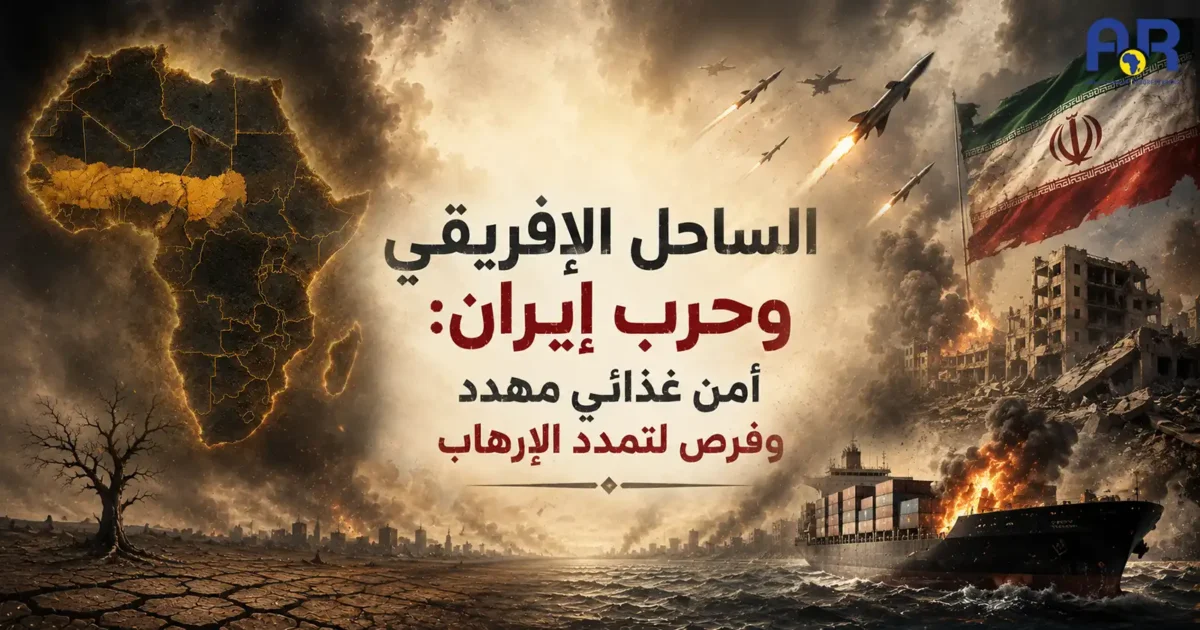
In a world where crises have become unprecedentedly interconnected, wars are no longer confined within their geographic borders. Instead, they spill over to impact distant territories that were never direct parties to the conflict. Thus, when Tehran trembles under the weight of regional tensions, the African Sahel does not remain insulated from the repercussions. Rather, it finds itself at the core of a complex equation where politics intersects with economics, and security collides with food supplies.
Today’s war is no longer a mere military confrontation; it has evolved into an extended force reshaping global supply chains, exerting pressure on energy markets, and exposing the fragility of economies reliant on external sources for their basic needs. In this context, the African Sahel emerges as one of the regions most vulnerable to these compounding shocks. Here, crises of poverty and weak economic infrastructure intersect with international turmoil, producing a fragile reality that fuels ongoing instability.
Consequently, the fallout from Middle Eastern conflicts cannot be understood in isolation from their reflections in Africa—particularly in the Sahel region, which has become an open arena for the reshaping of international influence. As major powers remain preoccupied with their own conflicts, the African citizen remains the weakest link, bearing the cost of crises they did not create yet remaining at the very center of their consequences.
First: Disruptions to Global Supply Chains and Their Impact on Food in Africa
The disruption of global supply chains represents one of the most prominent challenges facing the international food system in recent decades, particularly amidst successive geopolitical crises. With escalating tensions and conflicts, the flow of essential commodities—primarily grains, fertilizers, and energy—becomes disrupted, directly impacting import-dependent nations. Africa stands as one of the most vulnerable regions to these disruptions, as many of its countries rely heavily on external markets for food security, making any supply chain failure a direct threat to food stability and social peace.
Africa sits at the center of the indirect consequences of the U.S.–Israeli war on Iran. Its heavy external dependence on energy, food, and trade renders it acutely susceptible to global shocks. Consequently, conflict effects rapidly diffuse across the continent through surging prices, eroded purchasing power, and worsening living conditions.
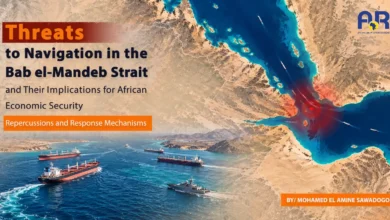
Military escalation has coincided with heightened security risks in the Red Sea and the Gulf of Aden—two vital corridors for global trade and African food supplies. These developments have prompted several international shipping firms to reroute vessels away from the Suez Canal toward the Cape of Good Hope. This detour adds 10 to 15 days to maritime transit between Asia and Europe, significantly driving up shipping and insurance costs. For African nations dependent on food imports—especially in East Africa and the Horn of Africa—these rising transport costs translate directly into higher prices for essential commodities like grains, cooking oils, and fertilizers. This is particularly critical given that many African economies rely on imports to cover over 40% of their food needs. Should tensions persist, logistical bottlenecks will worsen, threatening higher food prices and severe food insecurity in countries already suffering from drought or internal conflict.
While global attention has largely focused on oil, this vital maritime corridor is also a key route for fertilizer shipments, threatening both crop yields and daily meals. Even with a ceasefire taking effect, only a small number of ships continue to pass through, according to CNN. UN data shows Africa spends between $70 billion and $100 billion annually on food imports, over $120 billion on refined petroleum products, and imports more than 6 million metric tons of fertilizer each year. Even before the conflict erupted, the World Food Programme (WFP) warned of a “catastrophic” year, projecting that 55 million people in West and Central Africa would face crisis-level hunger.
Experts emphasize that African nations—where farmers rely heavily on imported fertilizer and households spend a large portion of their income on food—are uniquely vulnerable to supply chain disruptions stemming from Middle East conflicts. The conflict severely disrupted trade through the Strait of Hormuz, a vital passage not only for oil and gas, but also for fertilizers produced in massive quantities across the Gulf region. African nations rank among the most dependent on seaborne fertilizer imports from the Middle East. A report by the United Nations Conference on Trade and Development (UNCTAD) highlights that 54% of Sudan’s fertilizer arrives via this route, alongside 30% for Somalia and 26% for Kenya. Roughly one-third of global seaborne fertilizer trade, an essential element for agricultural productivity, passes through the Strait of Hormuz.
This one-third share of global seaborne fertilizer trade is vital for crop yields. Much of the world’s fertilizer is produced in the Persian Gulf, leveraging cheap fossil gas—a key input for nitrogen fertilizers like urea—and abundant sulfur, a byproduct used in phosphate fertilizers.
In Sudan, Somalia, and Ethiopia, “millions of people are already living through conditions of drought, hunger, displacement, and conflict,” Melaku Yirga, Vice President for Africa at Mercy Corps, told CNN. He warned that we could be on the precipice of “the first major post-aid era crisis, where the need is immense, but response simply does not arrive.” The International Rescue Committee (IRC) reported severe disruptions in delivering vital aid due to shipping delays. The IRC noted that medical supplies meant for 20,000 people in war-torn Sudan—where needs have reached catastrophic levels—remain stuck, alongside over 600 cartons of therapeutic food capable of saving more than 1,000 severely malnourished children in Somalia. Both Sudan and Somalia depend on fertilizer imports transiting the Strait of Hormuz and face heightened risks of severe hunger if the crisis persists, according to the WFP.
In light of this, global supply chain disruptions clearly extend beyond economic metrics to inflict deep humanitarian and security impacts across Africa. This highlights an urgent need for flexible strategies: diversifying import sources, boosting domestic production, and establishing shock-absorbing food reserves. Without these measures, Africa will remain exposed to global crises, deepening poverty and threatening stability across many of its nations.
Second: Surging Energy Prices and Their Repercussions on Food Security
Surging energy prices represent a major strain on food security systems globally, especially in developing nations heavily reliant on imported food and agricultural inputs. Energy is not an isolated sector; it serves as the backbone of farming, transport, storage, and food processing. As geopolitical crises escalate and oil and gas markets fluctuate, food production costs rise, directly affecting basic commodity prices and threatening the ability of vulnerable populations to meet their dietary needs.
African nations are bracing for potential shocks. Kenyan Energy Minister Opiyo Wandayi recently stated that his country has secured petroleum import schedules through late April 2026, adding that the ministry will take necessary measures to ensure uninterrupted supply. In Tanzania, President Samia Suluhu Hassan directed the Ministry of Energy to bolster strategic fuel reserves. Ethiopia implemented dedicated fuel subsidies to absorb economic shocks from global oil price spikes, while Zambia warned retailers against fuel hoarding. Although mechanisms like subsidies help soften short-term oil price spikes, they may prove insufficient over the long term. The continent experienced similar shocks in 2022 when Russia’s invasion of Ukraine disrupted global supply chains. On the other side of the supply chain, rising crude prices could mean increased revenues for oil exporters like Nigeria, Algeria, and Angola as buyer demand shifts toward them. Regarding African exports, the conflict impairs shipments heading to or transiting through the Middle East by air and sea. Kenyan Agriculture Minister Motahi Kagwe stated that the conflict disrupted exports of meat, tea, and other food products to the Middle East.
African government responses to the crisis have varied. Tanzanian President Samia Suluhu Hassan scaled down her official motorcade and instructed accompanying officials to travel together in shared buses to save fuel amidst rising oil prices. Madagascar declared a state of national emergency in the energy sector due to ongoing supply disruptions. In South Sudan, where most electricity relies on fossil fuels, power rationing was imposed in the capital in response to oil shortages; despite producing crude oil for export, South Sudan lacks sufficient refining capacity, forcing it to import most refined products. In Malawi, petrol prices surged by 34%, while jet fuel prices jumped by 81%.
Effects of the conflict are already visible in regional fuel markets. Driven by high prices and supply shortages, Ethiopian Prime Minister Abiy Ahmed advised citizens to rationalize fuel consumption for essentials. The government recently instructed all public institutions and state-owned enterprises to grant non-essential staff annual leave to alleviate fuel shortages paralyzing transport nationwide. Ethiopia consumes approximately 103,689 barrels of oil per day (37 to 44 million barrels annually), spending over $4.2 billion every year on fuel imports, primarily from the Middle East. In Addis Ababa, the situation is characterized by empty fuel tanks and longer, quieter days for a city that rarely sleeps.
The correlation between energy prices and food security is directly proportional and complex: every increase in fuel costs drives up the cost of operating farm machinery, inflates petrochemical-linked fertilizer prices, and multiplies transport and shipping expenses. In the African context, this crisis is compounded by weak infrastructure and high import dependency, leaving local markets vulnerable to external shocks. Beyond economic impacts, this dynamic carries grave social consequences: rising food prices drive up rates of poverty and malnutrition, creating fertile ground for social unrest and instability.
Governments across Africa are already struggling with budget constraints, making them particularly vulnerable to supply chain shocks. Gervin Naidu, a political analyst at Oxford Economics Africa, noted, “Any disruptions or shocks affect us all.” XN Iraki, a professor of business and economics at the University of Nairobi, remarked that the impact of rising oil prices will be felt “acutely” in Africa because most of the continent’s population works in the informal sector, where “income is not guaranteed.” Rama Yade, Senior Director of the Atlantic Council’s Africa Center, posted on X that rising oil prices pose “serious economic challenges” for many African governments, adding that governments may be forced to increase subsidies or pass costs to consumers, “which could lead to social and political pressure.”
Simon Mulongo, former African Union Special Envoy to Somalia and the Sahel, told CNN that the temporary ceasefire came too late to relieve African countries struggling with rising resource prices. “It came late and disproportionately,” he noted, adding that oil-importing nations on the continent continue to face “currency pressures, declining subsidies, and rising fuel prices.” Meanwhile, political science professor and international security analyst Fola Aina remarked, “Previous shocks like the COVID-19 pandemic and the Russia-Ukraine war show that African economies remain highly exposed to global volatility.”
In light of these realities, integrated policies mitigating energy price volatility on food security are essential. This requires diversifying energy sources, boosting local agricultural production, and investing in sustainable supply chains. Addressing this crisis demands more than temporary fixes; it requires a long-term strategic vision to achieve greater food self-sufficiency and reduce vulnerability to global turmoil.
Third: Fragility of African Economies to Geopolitical Shocks
African economies rank among the most vulnerable to global geopolitical shocks due to heavy import reliance for vital supplies like food and energy, alongside limited economic diversification and weak infrastructure. As international tensions rise and crises recur, these economies face volatility beyond their control, exposing structural fragilities and undermining their resilience.
While Africa is conventionally viewed as highly vulnerable to geopolitical disruptions and aid cuts, several of its economies have demonstrated notable adaptability, achieving strong growth despite growing global pressures. International projections indicate that several African nations will rank among the world’s fastest-growing economies in 2026, driven by structural factors like reduced shock exposure and improved institutional capacity to manage external fluctuations. Real-world experiences reveal a stark divergence across the continent: while aid-dependent nations face severe headwinds, others have successfully mobilized domestic resources, diversified trade, strengthened regional partnerships, and mitigated shock impacts.
The closure of the Strait of Hormuz—through which roughly 20% of global oil passes—dropped crude oil prices to around $100 per barrel while pushing jet fuel prices above $200. Damage to energy infrastructure, including LNG facilities in Qatar, compounded the shock. Despite its geographic distance, East Africa faces repercussions in higher energy costs, trade and aviation disruptions, and strained food supply chains. Additional risks stem from instability along key maritime routes like the Red Sea and the Suez Canal, which may force ships onto costly alternative routes around the African continent.
Current geopolitical shifts and trade disruptions have injected widespread uncertainty into the global economy. Conflicts, trade friction, and declining foreign aid have forced governments and investors to reassess risk. Africa is frequently portrayed as the weakest link in this landscape due to its historical reliance on external financing and economic fragility. Recent experience presents a more nuanced picture: many African economies have displayed remarkable agility in adapting to shifts, prompting a reevaluation of traditional assumptions that lump the continent into a single high-risk category.
International estimates indicate that Africa imports $70–100 billion in food, over $120 billion in refined petroleum products, and more than 6 million tons of fertilizer annually. Maritime disruptions and rising insurance premiums—especially surrounding the Strait of Hormuz—have triggered sharp price spikes. In countries like Nigeria and Malawi, fuel prices jumped between 30% and 50%, while fertilizer prices climbed over 40%, directly threatening the agricultural season across West and Central Africa. These indicators echo findings from the COVID-19 pandemic and the Russia-Ukraine war, where African governments faced limited capacity to build rapid alternatives and were forced into expensive borrowing, reducing productivity and widening food security gaps.
The fragility of African economies is evident in how quickly global crises transmit locally, whether through commodity price spikes or supply disruptions. With every geopolitical crisis—such as wars or economic sanctions—citizen purchasing power erodes, placing added pressure on resource-constrained governments. Furthermore, reliance on raw material exports leaves these nations at the mercy of global market swings without sufficient tools to absorb shocks. Weak regional integration exacerbates this, limiting collaborative opportunities to navigate crises.
Geopolitical tensions also drive investor flight from emerging markets, including Africa, toward safe-haven assets like the U.S. dollar and gold. This shift reduces foreign direct investment (FDI) inflows and impedes infrastructure and energy project funding. Furthermore, Gulf economies that host large African migrant populations may be impacted by conflict, threatening remittance flows. With millions of African households relying on remittances as a primary income source, any decline risks depressing domestic consumption, increasing poverty rates, and undermining social stability.
Facing these challenges, strengthening economic resilience across Africa is an urgent necessity. This requires diversifying income sources, expanding local manufacturing, and deepening regional economic integration. Without meaningful structural reforms, these economies will remain vulnerable to geopolitical crises, endangering long-term development and regional stability.
Fourth: Worsening Poverty as a Breeding Ground for Extremist Expansion
Poverty is one of the most dangerous structural challenges facing many nations, particularly in fragile regions marked by weak state institutions and declining developmental opportunities. Amid compounding economic crises and regional conflicts, poverty evolves from a social issue into a catalyst for instability. Extremist groups exploit this fertile environment to recruit individuals and expand their influence, leveraging widespread frustration, marginalization, and a lack of economic alternatives.
Following Hamas’s attack on Israel on October 7, 2023, Iran opened multiple fronts against Israel and U.S. forces through its regional proxy network, including Hezbollah, the Houthis, and Iraqi Shiite militias. Israel’s assassination of Hezbollah leader Hassan Nasrallah in September 2024, followed by a ground invasion of southern Lebanon and strikes on Iranian S-300 air defense systems in October 2024, fundamentally altered the regional balance of power.
Houthis could potentially target UAE, Israeli, or U.S. military assets in the Horn of Africa if they join Iran’s regional retaliatory campaign. Iran launched strikes against Israel and U.S. bases in the Middle East, as well as across all six Gulf Cooperation Council (GCC) nations, in response to U.S.-Israeli strikes. The United Arab Emirates, followed by Kuwait and Qatar, bore the brunt of hundreds of Iranian ballistic missiles and drones launched across the Arabian Peninsula. This campaign aimed to exploit the relative vulnerability of GCC defenses compared to Israel and U.S. bases, pressuring the GCC to push Washington toward a ceasefire and negotiations, despite GCC refusals to let the U.S. or Israel use their airspace to attack Iran.
The Houthis could target UAE or Israeli military sites in de facto independent Somaliland as part of their Red Sea offensive campaign. In recent years, the UAE upgraded its military facilities in the coastal city of Berbera, Somaliland—located under 200 miles from the Red Sea’s southern entrance at the Bab al-Mandab Strait. These facilities include a modern naval port, deep-water basin, and an airfield with hangars supporting UAE operations across Yemen and the Horn of Africa. The UAE helped facilitate Israel’s formal recognition of Somaliland in December 2025, which the Critical Threats Project (CTP) assessed was partly aimed at expanding Israeli strategic depth against the Houthis. Israeli and Somaliland officials discussed military basing options during recognition talks, and Somaliland officials confirmed in January that base negotiations remain ongoing. Agence France-Presse (AFP) reported on March 2 that “Israeli forces are likely already present at the Berbera military base,” citing a Western official who noted a “widespread assumption of an Israeli military or security presence in the country.” Houthi leader Abdul-Malik al-Houthi warned following the recognition that any Israeli assets in Somaliland would be legitimate military targets.
The link between poverty and terrorism is not merely causal; it is a complex nexus involving unemployment, social injustice, poor education, and a lack of economic mobility. Youth living in dire conditions become vulnerable to extremist groups offering financial incentives, empowerment, or a sense of belonging. Persistent poverty also weakens state security and governance capacity, leaving vacuums for these groups to operate and recruit. Countering terrorism cannot rely solely on security measures; it demands comprehensive development strategies that address root causes.
Iranian attacks, potential Gulf military responses, and broader UAE-Saudi rapprochement might de-escalate several local conflicts across the Horn of Africa. The war with Iran could diminish Saudi Arabia’s and the UAE’s capacity or willingness to sustain their proxy competition across the Red Sea and Horn of Africa. The UAE has airlifted hundreds of weapons shipments to countries bordering Sudan to supply the Rapid Support Forces (RSF) since the Sudanese civil war began in 2023. Meanwhile, Saudi Arabia was reportedly brokering a $1.5 billion arms deal in early 2026 between the Sudanese Armed Forces (SAF) and Pakistan, which is currently embroiled in a border conflict with Afghanistan. The UAE remains a key financial and military backer of Ethiopian Prime Minister Abiy Ahmed, who has repeatedly threatened to annex parts of neighboring Eritrea to secure sea access. Saudi Arabia strengthened ties with Eritrea to counter growing UAE influence in the Red Sea via Ethiopia and head off further regional instability. UAE arms shipments to Chad and Ethiopia—mostly destined for the RSF—have continued.
U.S. and regional distraction with the Iranian war could grant African actors and their partners greater freedom of action without consequences. U.S. mediation and private pressure had advanced toward a Sudan ceasefire over the past year, while the U.S., Turkey, and Saudi Arabia pressured Ethiopian Prime Minister Abiy Ahmed to prevent military action in northern Ethiopia or Eritrea in recent weeks. The new war will, at least temporarily, divert attention from these peace efforts. Reduced external pressure will create opportunities for African actors or their backers to act unchecked. The U.S. has repeatedly declined to increase pressure on the UAE over its RSF support out of concern it could jeopardize broader U.S.-UAE Middle East cooperation—a dynamic now essential in the Iranian war.
Poverty is not merely a byproduct of crises; it active deepens them by fueling cycles of violence and extremism. Addressing the expansion of extremist groups requires an integrated framework built on social justice, job creation, and quality education alongside security efforts. Comprehensive development remains the most effective tool to dry up the wellsprings of terrorism and build stable, secure societies.
Fifth: Reshaping Maps of International Influence in the African Sahel
The African Sahel is undergoing rapid shifts in power dynamics and international influence, driven by interconnected security, economic, and political crises. As traditional actors retreat and new powers emerge, the region has turned into an open arena for remapping influence. International and regional actors compete to consolidate their presence to serve strategic interests, whether in counterterrorism, resource access, or securing trade routes.
The fallout from the ongoing U.S.–Israeli war against Iran—launched on February 28 as a large-scale joint military operation against Iranian targets, followed by Iranian missile strikes across the Gulf—has extended far beyond West Asia. For African nations still recovering from the economic shocks of the Russia-Ukraine war, this crisis sparks fears of renewed energy price spikes, supply disruptions, and financial instability.
Yet, rather than ideological reactions, African government responses have reflected remarkable pragmatism. Diplomatic stances highlight Africa’s growing agency, shaped less by rigid alliances and more by national interests and strategic calculations.
Initially, given Africa’s historical support for the Palestinian cause and anti-colonial solidarity, sharp criticism of Israel and its allies was expected. Contrary to these expectations, most African governments refrained from directly condemning Washington or Tel Aviv. Instead, most publicly criticized Iranian missile strikes on neighboring Gulf states. This selective framing demonstrates a delicate balancing act: African nations strive to avoid alienating key economic and security partners while maintaining diplomatic flexibility.
Across the region—and in Kenya specifically—governments moved swiftly to condemn Iran, sidestepping the role of the U.S. and Israel in triggering the confrontation. In self-declared Somaliland, authorities strongly condemned Iranian strikes on Gulf states, calling them “unprovoked aggression” against the UAE, Qatar, Kuwait, Bahrain, Saudi Arabia, and Jordan. This stance was unsurprising: UAE investment in the Port of Berbera and expanded security cooperation form a cornerstone of Somaliland’s economic model and its pursuit of international recognition.
Geopolitical stakes extend beyond the Gulf. Israel recently became the first country to formally recognize Somaliland as a sovereign state, a move that fundamentally altered the diplomatic landscape in the Horn of Africa. Meanwhile, the Trump administration has indicated openness to considering a similar step, as officials in Hargeisa publicly offer Washington strategic port access and potential military base rights in exchange for recognition.
These shifts illustrate a fluid regional order in the Sahel, where dominance is no longer held by a single power, but distributed among multiple actors filling vacuums left by traditional allies. Political coups, growing extremist threats, and fragile state institutions are reshaping regional alliances. Several governments are diversifying external partners in search of security or economic support with fewer political conditions attached. However, while this international competition presents opportunities, it also carries the risk of deepening dependency and prolonging conflicts if managed without prioritizing local development and stability.
The remapping of international influence in the African Sahel reflects broader shifts in the global order. As powers seek to expand their footprint, the primary challenge for regional nations is leveraging this competition to their advantage without falling into proxy conflicts or surrendering sovereignty. Building strong domestic institutions and deepening regional cooperation remain the foundational pillars for lasting stability in this vital region.
Conclusion
Ultimately, this analysis reveals that modern conflicts are no longer measured by their geographic boundaries, but by their capacity to reshape global vulnerability. What transpires in Tehran does not stop at the borders of the Middle East; it reverberates across distant regions—chief among them the African Sahel, where food scarcity intersects with rising energy costs, and economic fragility meets escalating security threats.
The most dangerous outcome of these crises is not merely price inflation or supply bottlenecks, but the cumulative strain pushing entire societies toward exposure: widening hunger, deepening poverty, and eroding state capacity—all while extremist groups exploit the vacuum to expand. Here, terrorism is not an isolated phenomenon, but a direct byproduct of deep economic and social dislocations fueled by international conflicts.
As major powers remain consumed by managing their own strategic rivalries, a central question hangs in the balance: How long will Africa continue to pay the price for crises it did not create? Allowing these dynamics to persist not only threatens worsening humanitarian conditions, but risks forging new hubs of global instability originating from the world’s most vulnerable zones.
Containing crises after the fact is no longer enough. What is required is a fundamental rethinking of global governance structures to ensure equitable burden-sharing and provide fragile states with real tools for resilience. Without this shift, every tremor in major conflict centers will ignite fresh crises on the world’s periphery—where the toll is always highest.