Regional Economic Outlook for Sub-Saharan Africa: Hard-Won Gains Under Pressure
Regional Economic Outlook for Sub-Saharan Africa: Hard-Won Gains Under Pressure

Abstract
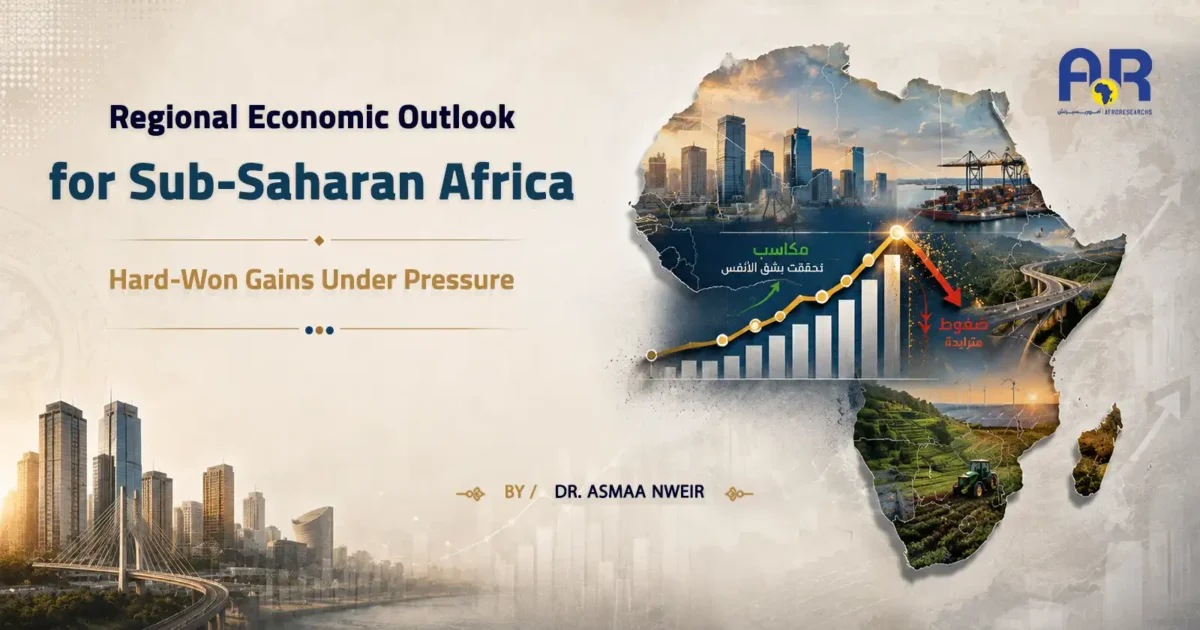
The IMF’s April 2026 report, ‘Regional Economic Outlook for Sub-Saharan Africa: Hard-Won Gains Under Pressure,’ provides a critical assessment of the region’s economic trajectory amid accumulating geopolitical and financial shocks and shrinking economic response margins. The report highlights a core paradox: the relative improvements achieved in 2025 are now surrounded by new pressures, presenting a complex test for African economies to safeguard their developmental gains. Regional growth reached 4.5% in 2025 but is projected to decline to 4.3% in 2026, with average inflation rising to around 5% by year-end. These indicators are not evenly distributed; some oil-exporting economies benefit from rising revenues, while low-income and fragile countries, especially oil importers, face severe constraints due to limited fiscal and financing buffers.
The report reveals that the decline in official development assistance is a major new source of vulnerability. Estimates of bilateral aid cuts starting in 2025 range between 16% and 28%, characterized by their broad scope, synchronization, and heavy reliance on donor decisions. This is particularly critical as low-income and fragile countries have limited capacity to offset the shortfall in external resources.
Conversely, the report proposes structural reforms as an entry point for rebuilding productive capacity, emphasizing private sector development, economic diversification, enhanced domestic resource mobilization, and improved expenditure and institutional efficiency. Artificial intelligence is also positioned as a developmental tool, especially in tax administration, service delivery, and financial inclusion, provided that digital infrastructure, energy, skills, cybersecurity, and data governance are available. Therefore, the report does not reduce the African challenge to weak growth rates, but links it to the states’ ability to translate reforms into sustainable institutional and productive capacity, reduce reliance on external financing, and build economic buffers more capable of absorbing shocks.
Keywords: Sub-Saharan Africa; Economic Growth; Development Assistance; Structural Reforms; Economic Fragility; Artificial Intelligence.
Introduction
Sub-Saharan African economies enter 2026 at a critical juncture characterized by overlapping external pressures and internal imbalances. Evaluating the region’s trajectory can no longer rely solely on growth rates; it requires examining the capacity of its economies and institutions to protect recent gains and transform them into a more sustainable foundation for development. The IMF report provides an analytical framework for monitoring economic shifts, focusing on the impact of geopolitical shocks, changing international financing conditions, declining development assistance, limited fiscal space, and the need for structural reforms.
The report’s indicators reveal a striking paradox: GDP growth reached 4.5% in 2025 but is expected to fall to 4.3% in 2026, with average inflation reaching 5%. This performance varies based on the nature of the economies and their exposure to commodities. Aid cuts further complicate this landscape, acting not just as a financial reduction but as a structural shift that affects funding for essential sectors like health and education. The report links these pressures to the need for structural reforms, private sector activation, and digital transformation.
Axis 1: Hard-Won Gains Under Pressure
Economic Performance in 2025
The year 2025 saw a relative improvement, with regional GDP growth estimated at 4.5%, the highest in a decade. This was driven by better economic policies in major economies like Ethiopia and Nigeria, and strong performance in Benin, Côte d’Ivoire, Rwanda, and Uganda. Inflation dropped to 3.4% by the end of 2025, and average public debt declined. However, this progress remains uneven and partially reliant on favorable external factors. Debt vulnerabilities persist, and regional growth remains insufficient for meaningful income convergence.
Repercussions of the War on the Region’s Outlook
The conflict in the Middle East added a new layer of risk, driving up prices for oil, gas, fertilizers, and shipping. Oil-importing countries face deteriorating trade balances and higher living costs, while oil exporters gain short-term revenues but remain exposed to price volatility. This led the IMF to downgrade the 2026 growth forecast to 4.3%.
Downside Risks Amid High Uncertainty and Fragility
Risks extend beyond the current shocks to include commodity price volatility, changing investor sentiment, tightening global financial conditions, and rising borrowing costs. The median fiscal deficit is expected to widen, and the growing sovereign-bank nexus poses additional threats.
Policy Priorities for Stability and Growth
The report emphasizes a delicate balance between short-term shock response and medium-term resilience. Priorities include anchoring inflation expectations, protecting vulnerable populations through targeted measures, and avoiding procyclical policies. Medium-term reforms should focus on monetary frameworks, domestic revenue mobilization, and governance.
Monetary and Exchange Rate Policies
Central banks face the challenge of controlling inflation without stifling growth. The report stresses central bank independence and clear communication. Exchange rate responses should align with the specific exchange rate regime and reserve levels.
Fiscal Policy: Balancing Credibility and Flexibility
With the median fiscal deficit projected to widen, governments have limited space for new programs without exacerbating debt. Fiscal credibility requires medium-term frameworks, efficient debt management, and improved domestic revenue mobilization, shifting focus from merely cutting spending to restructuring it towards high-yield developmental sectors.
Accelerating Growth and Diversification Led by the Private Sector
Addressing weak productivity is central. State-led growth is becoming less sustainable. Closing half the gap with emerging economies in governance and business regulation could boost regional output by up to 20% over 5-10 years. This requires transitioning the state’s role from a direct producer to a market regulator and infrastructure builder.
Building Support for Reform
Reforms are inherently political. Governments must build social and institutional consensus, communicate clearly, and involve stakeholders. Internationally, more predictable financing and technical assistance are needed, especially for low-income countries.
Update on US Tariffs and Trade Impact
The effective US tariff rate on Sub-Saharan Africa rose significantly before stabilizing. While the aggregate macroeconomic impact on exports to the US has been relatively contained, sectoral effects, such as a drop in South African auto exports, highlight the need for diversifying trade partners and deepening regional integration.
AI for Development as a Strategic Necessity
AI holds potential for agriculture, healthcare, and education, but the region’s readiness is low due to infrastructure and skill gaps. The report recommends investing in reliable electricity, broadband, data centers, and digital skills to leverage AI effectively.
Axis 2: Aid Cuts in Sub-Saharan Africa
Nature of the New Shock
The 16-28% cut in bilateral aid starting in 2025 is an exceptional shock due to its broad scope, synchronization, and donor-driven nature. It coincides with diminished fiscal space and institutional buffers, making the impact more profound than mere financial shortfalls.
Importance of Aid
Aid is a crucial developmental component, especially for fragile states like South Sudan, where it constitutes a large share of GDP. Much of this aid funds health, education, and humanitarian needs outside the official budget, meaning its loss directly impacts essential service delivery.
Shift Toward Multilateral Lending
There is a structural shift from grants to multilateral and concessional lending. While terms are favorable, loans still create future obligations, exacerbating debt risks for highly aid-dependent countries.
Macroeconomic Impacts and Policy Choices
Replacing lost aid with domestic borrowing widens deficits and increases debt, while failing to replace it harms growth and human capital. The report stresses that responses must blend targeted spending protection, improved efficiency, gradual revenue expansion, and cautious debt management.
Hard Choices in a Less Favorable Environment
Governments face difficult trade-offs. The ultimate goal should not be just filling the funding gap, but using the shock as an opportunity to build a more sustainable, self-reliant financing model driven by domestic resource mobilization and local institutional capacity.
Axis 3: Resetting the Growth Path
The Necessity of Growth and Structural Reforms
Current growth rates are insufficient for income convergence. The core issue is weak productivity. The report presents structural reforms in governance, business regulation, and trade as essential prerequisites for sustainable, private-sector-led growth.
Reaping the Fruits of Reform
Improving governance and business environments can yield substantial economic gains. State-owned enterprise reform is also critical to stop fiscal drains and improve service efficiency, particularly in energy and infrastructure.
Design, Prioritization, and Political Economy
The success of reforms relies on timing, sequencing, and political viability. Foundational reforms (macroeconomic stability, strong institutions) must come first. Because reforms create winners and losers, a strong social contract, transparency, and stakeholder engagement are vital to prevent pushback.
Future Path of Growth and Reform
The future hinges on redefining the state-market relationship. The state must build the regulatory and infrastructural environment that empowers the private sector. The report rejects a one-size-fits-all approach, advocating tailored strategies based on national capacities and contexts.
Conclusion, Results, and Recommendations
The analysis concludes that Sub-Saharan Africa must move beyond merely sustaining growth rates to rebuilding the foundations of that growth, making it more resilient to external shocks.
Key Results:
- Vulnerability varies widely based on economic structure and buffers.
- Aid cuts (16-28%) threaten crucial gains in health and education.
- Limited fiscal space increases the danger of over-reliance on external funding.
- Economic diversification and private sector growth are structural necessities.
- Domestic resource mobilization is increasingly critical.
- AI is a promising tool, contingent on foundational digital and energy infrastructure.
Key Recommendations:
- Rebuild growth models on productive diversification.
- Enhance domestic revenue mobilization via tax administration reform.
- Redirect public spending to high-yield sectors while protecting social expenditures.
- Diversify development financing sources and tools cautiously.
- Empower the private sector by improving the business environment and infrastructure.
- Develop customized African AI strategies focused on developmental needs.
- Establish strong data governance and cybersecurity frameworks.
- Deepen regional economic integration to expand markets and buffer shocks.
- Anchor economic reforms in social consensus and transparency to ensure sustainability.