Peace is taking place in the Central African Republic: between N’Djamena’s calculations and Bangui’s challenges
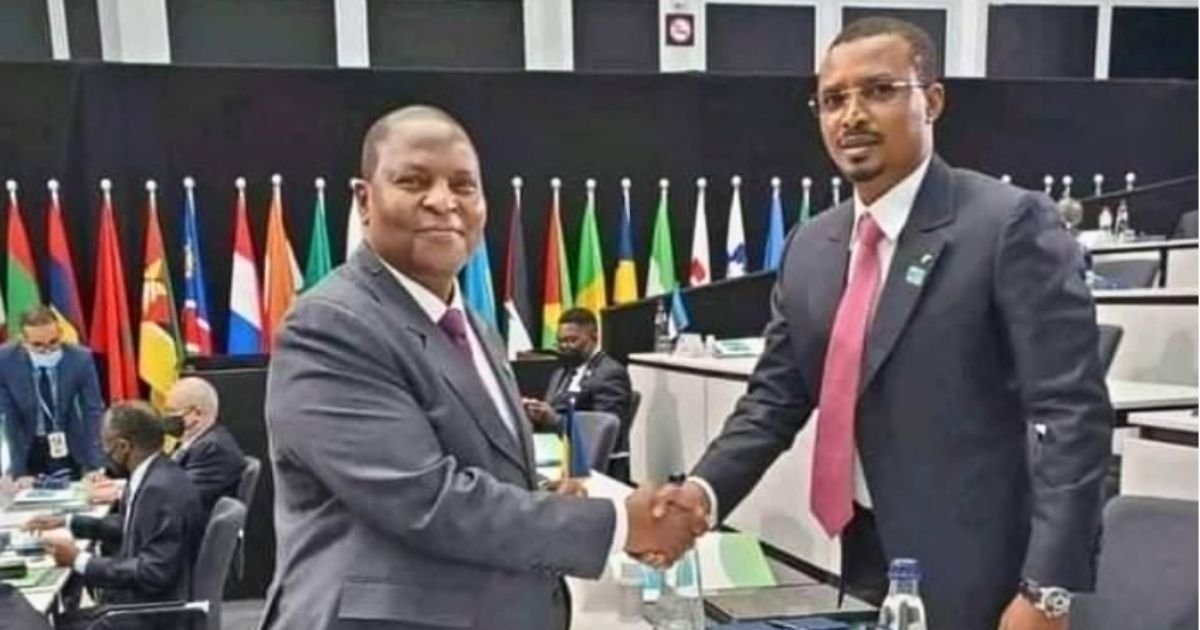
In a scene that redraws the balances of peace in the Central African region, N’Djamena, the capital of Chad, witnessed the signing of two peace agreements between the Government of the Central African Republic (CAR) and two armed groups: the Return, Reclamation and Rehabilitation (3R) and the Union for Peace in the Central African Republic (UPC). This step has been described as a new attempt to untie the knot of the armed conflict that has exhausted the country since 2013.
The agreement, mediated directly by Field Marshal Mahamat Idriss Déby Itno, carries profound symbolic and political significance, both in its substance and through the sponsoring authority.
Accordingly, this article aims to shed light on the dimensions of this new trajectory through five primary analytical pillars. It begins by reviewing the general background of the conflict, the two signatory groups, and their violent record. It then addresses the core terms of the agreement and its underlying political significance, particularly in light of previous failures—most notably the Khartoum Agreement (2019).
The report moves on to analyze Chad’s expanding role in managing regional conflict, followed by a focused reading of the key stakes and challenges that could impede the agreement’s implementation.
Finally, it concludes with a strategic assessment forecasting the implications of this shift for regional security in the Lake Chad basin and along shared borders, while offering policy recommendations to ensure the success of this path and consolidate its gains on the ground.
First: General Background of the Conflict
Since 2013, the Central African Republic has lived through a state of chronic armed conflict, sparked following the overthrow of President François Bozizé by a coalition of rebel groups known as Séléka—a predominantly Muslim coalition.
This was followed by a counter-escalation from Christian militias named the Anti-Balaka, plunging the country into a deadly vortex of sectarian violence that claimed the lives of thousands of civilians and led to the internal and external displacement of hundreds of thousands amid a near-total collapse of state institutions.
Despite the deployment of United Nations peacekeepers (MINUSCA) and multiple foreign interventions, the conflict found no path toward a sustainable resolution. Instead, the rebellion fragmented into multiple localized and ethnically based armed factions controlling vast swathes of the country and competing over vital resources such as gold, diamonds, and livestock.
Within this context, the Return, Reclamation and Rehabilitation (3R) group and the Union for Peace in the Central African Republic (UPC) emerged as the most prominent armed actors in the country’s northwest and east-central regions, respectively:
Return, Reclamation and Rehabilitation (3R): Founded in 2015 under the leadership of Bi Sidi Souleymane (also known as “Sidiki Abass,” belonging to the Fulani ethnic group shared with Chad). It is primarily concentrated in the Nana-Mambéré, Paoua, and Koui regions in the northwest, close to the borders with Cameroon and Chad. Launched under the pretext of protecting Muslim communities from Anti-Balaka abuses, it quickly turned into a group practicing systematic extortion and pillaging.
Union for Peace in the Central African Republic (UPC): Founded in 2014 by Ali Darassa, a figure from the Fulani community and a former senior commander in the Séléka. His forces are deployed across Alindao, Bria, and Bambari, where he established control over several trade routes and border crossings, linking his group to the illegal arms and resource trade.
In reality, both groups face documented allegations of committing war crimes and crimes against humanity, according to UN reports and international human rights organizations. These violations include:
Mass killings of civilians.
Abductions and sexual violence, particularly targeting women and children.
Extortion and the looting of humanitarian convoys.
Imposition of illegal taxation on local populations.
Child recruitment for use in combat or as couriers and scouts.
Consequently, leaders of both groups were placed on international sanction lists, including those of the United Nations Security Council and the European Union.
Failure of Previous Tracks
Despite the signing of the Khartoum Peace Agreement in 2019 between the Bangui government and 14 armed groups—including these two—the agreement failed to end the violence or integrate armed factions into state institutions. Armed violations persisted, and Disarmament, Demobilization, and Reintegration (DDR) provisions were implemented only partially.
Similarly, internal reconciliation initiatives failed due to a lack of trust, weak enforcement mechanisms, and the absence of genuine political will among certain rebel leaders, who used agreements as tools to legitimize their presence or secure temporary gains without a substantive commitment to peace process trajectories.
This accumulated reality explains the caution surrounding the new agreement signed in N’Djamena, placing it before a formidable test to restore trust and achieve a real breakthrough in the hardened wall of conflict.
Second: Core Provisions of the Agreement and Political Significance
The agreement signed in N’Djamena between the CAR Government and the two groups includes five pivotal provisions that reflect an ambition to end the armed rebellion and open a new page of political settlement:
Immediate cessation of hostilities across all territories of the Central African Republic, placing an initial end to combat activities and offering an opportunity to restore stability in affected areas.
Gradual implementation of the Disarmament, Demobilization, and Reintegration (DDR) program, ensuring former combatants are integrated into the civilian fabric through economic and social opportunities—a key clause to dismantle the armed structure of the groups.
Recognition of state authority across the country, including areas previously under the control of both groups, in exchange for guarantees of participation in public affairs management. This indicates a consensus-based approach combining the restoration of central sovereignty with political incentives for factions.
Establishment of a Joint Monitoring Committee under the direct oversight of Chad, tasked with tracking the agreement’s implementation. This reflects an evolution in enforcement mechanisms and gives the agreement a regional oversight dimension relied upon to build trust.
What Is New in This Agreement?
Unlike the Khartoum Agreement (2019)—which was signed under international sponsorship but failed to achieve a fundamental breakthrough—the N’Djamena Agreement is distinguished by three key elements:
Its specific focus on only two active groups, reducing the complexity of obligations and enhancing chances for implementation.
Direct regional sponsorship by Chad, giving the agreement practical weight on the ground regarding border control and fighter movements.
A shared commitment to involve the groups in managing public affairs, a development banked on to diminish the logic of armed rebellion in exchange for political gains conditional on peaceful engagement.
Through these provisions, the agreement is not merely a truce; it represents an attempt to re-engineer the relationship between the state and armed factions on new foundations.
Third: The Chadian Role in Achieving the Agreement
The choice of N’Djamena to host the peace agreement between Bangui and the armed factions was not arbitrary. It reflected Chad’s pivotal geopolitical role in Central Africa and its deep historical connection to the Central African Republic across security, political, and border domains.
Chad, which shares a long, porous border with the CAR, realizes that any instability in its southern neighbor does not remain self-contained. Instead, it rapidly spills northward, threatening the stability of its southern provinces—especially given fragile border systems and cross-border armed networks.
Field Marshal Mahamat Idriss Déby Itno’s sponsorship of this agreement reflects the Chadian leadership’s desire for regional repositioning, particularly following the retreat of the French role and the emergence of a political and security vacuum that neighboring countries are attempting to fill through a framework of sovereignty and responsibility.
The Field Marshal leveraged his symbolic position as a young president heading a major regional power to launch an active diplomatic track. This initiative restores confidence in African mediation and establishes a new model for continental solutions that do not rely solely on Western sponsorship.
Through this role, Chad combined quiet political mediation with the enforcement of regional regulation. It understands that managing its southern security environment requires positive engagement in Central African internal dynamics.
Consequently, this agreement does not merely reflect a diplomatic success for Chad; it also represents a strategic repositioning that demonstrates maturity in understanding surrounding conflicts and the necessity of managing them with an independent and balanced regional mindset.
Fourth: Stakes and Challenges
Despite the symbolic and political significance of the new peace agreement between the CAR Government and the two movements, its implementation on the ground faces complex stakes and actual challenges that threaten its stability and longevity.
The first challenge concerns the seriousness of the armed factions in adhering to the terms of the agreement, particularly given a long track record of reneging or exploiting previous accords for temporary tactical advantage.
Both 3R and UPC possess operational bases and independent financing networks. They have grown accustomed to managing their spheres of influence according to their own military and economic logic, making the dismantling of these structures difficult without strong incentives and strict monitoring.
At the state level, the Bangui government’s position appears caught between official openness to a settlement and close ties to its principal military partner: the Russian African Corps (formerly Wagner), which holds many keys to security decision-making.
This equation complicates power dynamics and may generate tension with new signatories if those factions feel their presence will be symbolic or subordinate to a third party they do not trust. In the same context, the challenge of integrating former combatants into state institutions—whether security or administrative—remains prominent.
This process requires financial resources, a legal framework, and sustained political will—conditions that were not fully present in past experiences. This leads some observers to question whether the scenario can be repeated successfully without explicit international support and meticulous planning.
Finally, the risk of political manipulation of the agreement cannot be ignored; the moment of peace could be exploited to buy time or secure tactical gains without a genuine intention to end the conflict. Such maneuvers, if unaddressed, could reproduce the crisis in more dangerous forms and erode public trust in national dialogue and political settlements.
Fifth: Implications of the Agreement on Regional Security
The peace agreement recently signed between the CAR Government and the two rebel movements under Chadian sponsorship carries dimensions extending beyond internal Central African dynamics into a fragile regional security landscape stretching from northern Vakaga to transit belts in southern Chad, western Sudan, and Cameroon.
These territories are no longer mere zones for conflict fallout from the CAR; they have become vital arenas for the irregular movement of arms and fighters. This dynamic has turned the tri-border area connecting Chad, Cameroon, and the CAR, alongside the eastern extension toward Sudan, into one of the most complex transnational threat fronts.
In this context, the new agreement represents a strategic opportunity to drain threat sources originating from Central African territory toward neighboring regions. Ceasing hostilities and engaging armed factions in DDR processes could reduce forced displacement, arms trafficking, and the exploitation of mountainous and forested corridors to transfer fighters or launch cross-border surprise attacks.
Furthermore, consolidating state authority internally and dismantling armed rebellion structures would curb demand within the illicit economies that sustain cross-border criminal networks.
At the regional level, the agreement serves as a model that could be scaled to other regions experiencing active rebellions—such as the Vakaga province with its critical geography bordering Sudan, or Bria, which represents an intersection of ethnicity, marginalization, and organized crime.
A successful outcome here could serve as a launching pad for similar dialogue tracks, provided there is neutral mediation and a comprehensive approach that recognizes the structural causes of violence and engages local actors as partners in reshaping the state.
To ensure the sustainability of these tracks, three core policy recommendations are advised:
Strengthen international monitoring and follow-up mechanisms for the agreement to safeguard it from derailment or political manipulation.
Direct resources toward supporting local communities—particularly in conflict-affected zones—through rapid-impact development projects.
Maintain the neutrality of the Chadian mediator, ensuring Chad does not transition from a mediating party into a stakeholder, especially given shifting regional balances, external roles, and its historical record in the region.
The real test of this agreement lies not in its signing, but in converting it into a lever for broader security transformation in the heart of Africa. Though fraught with obstacles, the opportunity remains open to establish a new approach to post-conflict management—one where geography becomes a factor for stability rather than a gateway to volatility.