Reconstructing Sudan: From the Rubble of War to a Sustainable Strategic Vision for Recovery
Abstract
This article examines the reconstruction of Sudan in the context of the humanitarian, economic and social repercussions of the conflict that erupted in April 2023, and the resulting widespread displacement, destruction of infrastructure, and disruption of basic services and productive activities. It aims to frame reconstruction as an integrated process that extends beyond the physical rebuilding of damaged facilities to encompass the restoration of livelihoods, the strengthening of services, support for social and psychological recovery, and the rebuilding of state institutions. It also considers the possibility of initiating recovery pathways in more stable areas before fighting ceases throughout the country, and reviews intervention priorities in light of lessons drawn from Rwanda, Sierra Leone, and Bosnia and Herzegovina. Finally, the article presents a practical vision based on a comprehensive assessment of damage, prioritization, phased implementation, and the expansion of national and local partnerships, with a commitment to transparency and sustainability.
Keywords: reconstruction of Sudan, recovery, infrastructure, impacts of war, state rebuilding, sustainable development, community reconciliation
Introduction
The war that erupted in Sudan in April 2023 caused a complex humanitarian, economic and social crisis, whose effects ranged from the tragic loss of life and mass displacement to damage to critical infrastructure and the paralysis of basic services and productive sectors. This destruction was not confined to physical assets; it also profoundly affected social cohesion and the capacities of service-providing and executive institutions. In the face of these grave challenges, reconstruction emerges as an urgent national necessity that goes beyond the limits of physical rebuilding and repair towards a comprehensive process that revitalizes economic and social recovery and restores the effectiveness of institutions and human agency. This article discusses the scale of the destruction in numerical terms and the feasibility of initiating recovery activities early. It also reviews the principal reconstruction pathways and lessons from international models, before proposing a vision suited to the specific realities of Sudan.
I. The Impacts of War and the Scale of Destruction in Figures
A. People and Displacement
Sudan is experiencing a worsening humanitarian crisis with far-reaching social and economic consequences. According to the World Bank’s 2025 report, the conflict claimed more than 61,000 lives in Khartoum State alone between April 2023 and June 2024. It has generated the world’s largest forced displacement crisis, affecting approximately 12.9 million people, including 8.9 million internally displaced persons and 3.8 million people who crossed into neighboring countries, particularly Chad, Egypt and South Sudan. Military operations have severely damaged housing, forcing approximately 31% of urban households to relocate to other states.
Furthermore, the widespread presence of landmines and unexploded ordnance poses a serious threat to civilian safety, humanitarian operations and economic recovery. Reports indicate that key strategic areas in Khartoum, such as the Al-Jaili refinery and telecommunications and military facilities, have been heavily mined, turning them into high-risk areas that impede the return of displaced people, obstruct relief efforts and delay the rehabilitation of critical infrastructure.
B. Basic Services
An acute public health crisis is unfolding in the country, with outbreaks of epidemic diseases such as cholera, dengue fever and malaria. According to World Bank estimates, approximately 3.4 million children under five face imminent health risks as a result of the sharp decline in vaccination rates and the destruction of water and sanitation infrastructure. An estimated 70% to 80% of health facilities in the most severely affected states, such as Khartoum, Al Jazirah, Kordofan and Darfur, are either completely closed or operating at minimal capacity. Massive destruction in the health, education, telecommunications and trade sectors has also caused a severe supply shock, given the previous concentration of these services in the capital, Khartoum.
C. The Economy and Livelihoods
The conflict has almost entirely paralyzed economic activity and infrastructure as a result of the sharp decline in consumption and private and public investment. The principal economic indicators documented in the World Bank’s 2025 report can be summarized as follows:
- Labour market and employment: The unemployment rate rose from 32% in 2022 to 46% in 2023 and then to 47% in 2024. The most significant shift was the collapse in fully paid employment opportunities, from 33% before the war to only 16%, pushing most of the workforce into the informal and marginal sectors.
- Agriculture and food security: Agriculture, the main driver of growth and the largest employer, has sustained severe damage as a result of the looting of stocks, shortages of seeds, fertilizers and fuel, and the disruption of trade routes. Cereal production in 2023 fell by 40% compared with the average of the preceding five years, and by 46% compared with 2022.
- Economic contraction and living conditions: A survey conducted in 2024 across three states showed that 68% of respondents faced a sharp deterioration in working conditions, while 80% described the economic situation as substantially worse because of rising prices and declining incomes. Gross domestic product contracted by 29.4% in 2023 and by a further 13.5% in 2024.
Table 1: Macroeconomic Indicators and Projections for 2022–2027 (according to the World Bank report)
| Macroeconomic indicators (%) | 2022 | 2023 | 2024 | 2025 | 2026 | 2027 |
| Real GDP growth | -1.0% | -29.4% | -13.5% | 5.0% | 9.3% | 4.1% |
| Agriculture | 1.0% | -14.9% | -7.6% | 4.7% | 8.5% | 4.4% |
| Industry | -0.7% | -25.8% | -13.1% | 2.0% | 7.5% | 3.7% |
| Services | -3.0% | -43.2% | -22.0% | 8.9% | 12.4% | 4.2% |
| Inflation (CPI) | 164.2% | 65.8% | 170.0% | 89.4% | 33.1% | 20.0% |
| Expenditure (% of GDP) | 11.7% | 8.6% | 8.8% | 9.3% | 9.9% | 10.2% |
| Debt (% of GDP) | 183.6% | 167.3% | 147.4% | 142.7% | 124.2% | 106.4% |
These data and projections for the coming years confirm that reconstruction cannot be confined to physical rebuilding. It also requires the restoration of essential livelihood resources and macroeconomic stability alongside infrastructure rehabilitation.
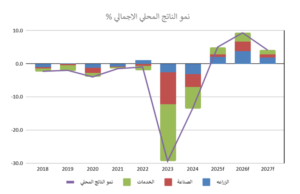
Figure 1: GDP Growth (%) from 2018 to 2024 and Estimates for 2025, 2026 and 2027
(prepared by the author using World Bank data, 2025)
II. Can Recovery and Reconstruction Begin Before the War Ends?
The central argument here does not claim that comprehensive reconstruction is possible while war continues. Rather, it affirms that “early recovery” and the response to urgent needs can begin in accessible areas while the conflict persists, whereas major development projects require a minimum level of security and stability.
Despite security and logistical constraints, interventions by partners on the ground, such as the United Nations Development Program (UNDP), as documented in its 2026 report on 2025 results, have demonstrated the possibility of making a tangible difference. These interventions included:
- Providing vital health services to more than 4.9 million people, including insulin and treatments for tuberculosis and HIV in the hardest-to-reach areas.
- Supporting the livelihoods of nearly 2.1 million people through climate-smart agriculture, microfinance and cash-for-work programes.
- Enabling 1.75 million people to rebuild their income sources across 10 states and helping 25,000 women transition to sustainable activities.
- Providing solar energy to 750,000 people and clean drinking water to 819,000 people.
As “pockets of relative safety” emerged, more than one million internally displaced people began returning to their areas of origin. In addition, approximately 320,000 people returned from neighboring countries, especially Egypt and South Sudan, to explore opportunities for resettlement, particularly in Khartoum, Sennar and Al Jazirah states. Accordingly, determining what can currently be implemented requires a flexible, gradual approach that links urgent needs to the security situation in each area.
III. What Forms of Reconstruction Are Possible at the Present Stage?
Reconstructing Sudan is not limited to rebuilding the buildings and facilities destroyed by war. It encompasses a set of interconnected pathways aimed at restoring economic activity and basic services, addressing the social impacts of the conflict, and strengthening the capacity of state institutions to fulfil their functions. The study “Factors Affecting the Rebuilding of the Sudanese State” emphasizes the importance of restoring the state’s political, social, economic and cultural functions, promoting good governance, combating poverty and exclusion, and achieving balanced and sustainable development (Source 3).
In light of the nature of the damage and needs in Sudan, reconstruction and recovery can be classified into five main pathways:
- Economic recovery and the restoration of productive activity: This pathway requires the revitalization of productive sectors, foremost among them agriculture, by supporting farmers, supplying agricultural inputs and improving food supply chains. It also encompasses support for small enterprises and local manufacturing, improved access to finance, and encouragement of economic activities capable of generating sustainable employment (Source 4). Developing renewable energy sources, such as solar power, and expanding financial services can effectively support productive activity, particularly in areas where infrastructure and markets have been damaged.
- Rehabilitation of infrastructure and basic services: This pathway involves assessing damage to water, electricity, road and telecommunications networks and public facilities, and prioritizing repairs according to local needs and population density. It also includes rehabilitating health and educational facilities, providing essential supplies, and supporting continuity in education and healthcare. UNDP’s interventions in Sudan in 2025/2026 demonstrate the importance of providing emergency solutions for health services, water and energy in conflict settings (Source 2).
- Social recovery and protection of affected groups: Recovery requires addressing the effects of displacement and the loss of housing and income sources, while taking into account the pressure on host communities’ services and resources. This includes improving shelter conditions, creating the conditions for safe, voluntary and dignified return, and protecting the most vulnerable groups. Psychological and social support services should also be provided, and community cohesion strengthened, to help affected people regain their capacity for productive and social participation (Source 4).
- Rebuilding state institutions and strengthening governance: Reconstruction requires institutions capable of planning, implementation and the efficient and transparent management of public resources. This pathway includes strengthening accountability, reducing corruption and exclusion, broadening community participation, reinforcing the role of civil society organizations, and achieving a more balanced distribution of services and resources across Sudan’s states, in line with the requirements of modern state-building (Source 3).
- Sustainability, prioritization and implementation phases: Reconstruction requires a phased approach that sequences interventions according to the urgency of needs, the scale of damage and security conditions. Immediate basic needs should be prioritized alongside the planning of medium- and long-term projects. Projects should also take safety, environmental and climatic conditions into account, and be grounded in continuous assessment, precise measurement indicators, and transparent mechanisms for oversight and evaluation.
IV. International Experiences in Recovery and Reconstruction: What Can Sudan Learn?
1. Rwanda: Community Reconciliation and the Rebuilding of State Institutions
Following the 1994 genocide, Rwanda faced widespread destruction affecting society, the economy and state institutions. Recovery efforts included rebuilding public institutions, expanding services, strengthening national reconciliation and developing transitional justice mechanisms through community-based “Gacaca” courts to address genocide cases and reintegrate convicted persons (Sources 5, 6).
- Lesson for Sudan: Reconstruction is not limited to physical rebuilding; it also requires addressing the effects of violence, restoring community trust, and building institutions capable of performing their functions fairly and impartially.
2. Sierra Leone: Disarmament, Reintegration and Linking Peace to Economic Recovery
Sierra Leone experienced a prolonged civil war that ended in 2002. Its recovery efforts included disarmament, demobilization and reintegration programes, the establishment of a Truth and Reconciliation Commission, and the rehabilitation of basic services (Source 7).
- Lesson for Sudan: Ending the fighting is not sufficient on its own to sustain peace. Combatants and those affected by demobilization programes need realistic employment and training pathways, with reintegration programes linked to the empowerment of host communities and their local economies.
3. Bosnia and Herzegovina: Infrastructure Reconstruction and the Challenges of Reconciliation and Governance
Following the Dayton Agreement (1995), Bosnia and Herzegovina underwent extensive rehabilitation of transport, energy and health infrastructure, with international support that also enabled the reconstruction of shared landmarks such as the Mostar Bridge (Source 8). Nevertheless, the country faced continuing challenges arising from the complexity of its governance system and weak institutional coordination.
- Lesson for Sudan: Infrastructure reconstruction must not be separated from addressing the root causes of conflict and designing a flexible, unified system of governance and administration that prevents institutional divisions and ensures the equitable distribution of resources.
4. Summary of Lessons for Sudan
Drawing on international models does not mean reproducing solutions verbatim, but rather deriving practical principles consistent with Sudan’s specific circumstances:
- Closely coordinating human recovery, the repair of facilities and institutional development.
- Linking comprehensive peace to social justice and balanced development.
- Adopting management based on transparency and partnership among the state, the private sector, the diaspora and local communities.
V. Towards a Practical Vision for Reconstructing Sudan
Moving from theoretical discussion of Sudan’s reconstruction to practical implementation on the ground requires a courageous and clear national vision, grounded in an accurate assessment of damage and needs and attentive to differences in development and security across the states. This vision should not stop at repairing damaged built assets. It should instead be treated as a historic opportunity to correct pre-existing structural imbalances in urban and regional planning and to develop sustainable infrastructure that respects the local environment and responds to climate change, with the active participation of local communities (Source 9).
This practical vision is integrated through five fundamental pillars:
- Setting priorities according to on-the-ground and intellectual needs: Work should begin with a comprehensive and continuous assessment of damage and physical, economic and psychosocial needs. Priorities must be ranked according to the urgency of the service and its direct impact on citizens’ lives. Areas lacking water, healthcare and education require urgent emergency interventions that differ from those needed in areas capable of accommodating projects to revive agriculture and trade and rehabilitate roads.
- Adopting a phased and integrated implementation approach: Given the extensive destruction, limited resources and variations in security, recovery should preferably be divided into three overlapping and interconnected phases:
- Immediate phase (response and early recovery): Focus on providing clean water, healthcare, food and cash support, and restoring basic services in safe pockets.
- Medium-term phase (revitalization and rehabilitation): Rehabilitate schools, health facilities, electricity and water networks; support agricultural and small-scale production; and enable the voluntary and safe return of displaced people.
- Long-term phase (sustainable development and modernization): Expand major infrastructure, modernize productive sectors, reform public institutions, and adopt development policies that ensure equity among regions.
- Building a broad national and community partnership for reconstruction: Managing reconstruction requires high-level institutional coordination. The state establishes legislative frameworks, sets directions and guarantees transparency. Local communities participate in identifying needs and monitoring implementation on the ground, while the private sector leads operations and job creation. The diaspora and Sudanese engineers and experts abroad also play a pivotal role in technology transfer, investment mobilization and innovation, alongside technical and humanitarian support coordinated with international organizations.
- Placing “people” at the heart of reconstruction: The success of reconstruction is not measured by concrete structures alone, but by society’s capacity for psychological and social recovery. It is therefore necessary to integrate psychosocial support programes, prepare young people and children to return to education and vocational training, and protect the most vulnerable groups. Rebuilding human capacities enables people to participate in economic and political life and strengthens opportunities for community reconciliation and the restoration of trust, thereby helping to prevent renewed conflict.
- Ensuring sustainability, governance and transparency: Reconstruction projects must be prevented from becoming temporary solutions by applying standards of safety, quality and equity in resource distribution. This requires establishing a rigorous oversight system that discloses funding sources and expenditure, and providing local communities with tools to monitor project progress and evaluate outcomes.
Conclusion
Examining the impacts of the war in Sudan shows that the scale of accumulated challenges extends beyond construction and material repair to encompass the need to revive services, restart the economy, protect livelihoods, heal social wounds, and build state institutions capable of resilience and service to citizens. Accordingly, approaching reconstruction as a comprehensive strategic process with interconnected dimensions is the only way to achieve genuine and sustainable recovery.
As the international experiences of Rwanda, Sierra Leone, and Bosnia and Herzegovina have shown, the availability of funding and the repair of infrastructure do not, by themselves, guarantee peace unless accompanied by measures to address historical grievances, create employment opportunities, and build accountable and inclusive institutions. While affirming the flexibility to initiate early recovery activities in safe pockets before the wider conflict ends, drawing on these experiences requires adapting them to Sudan’s diverse circumstances.
Finally, reconstructing Sudan is not merely about rebuilding what was destroyed in the past. It is a historic opportunity to build a new Sudan: a more stable, just and sustainable Sudan in which Sudanese citizens, their well-being and their dignity are the driving force and ultimate objective of development.