The Doha Framework Agreement: Resetting the Course of the Conflict and Crafting a Peace Opportunity in Eastern Congo
At the beginning of 2025, Goma resembled a city standing on the edge of a cliff, uncertain whether it would plunge or be saved at the last minute. The M23 movement was expanding in the northeast as if redrawing maps by force, while the state’s capacity to maintain security waned, and displacement escalated to levels that exposed the fragility of the entire system.
The situation in eastern Congo appeared to be entering a new phase of lawlessness: regional calculations intersected with a long legacy of internal fragmentation, and repeated mediation efforts repeatedly crashed into a unrelenting wall of crisis.
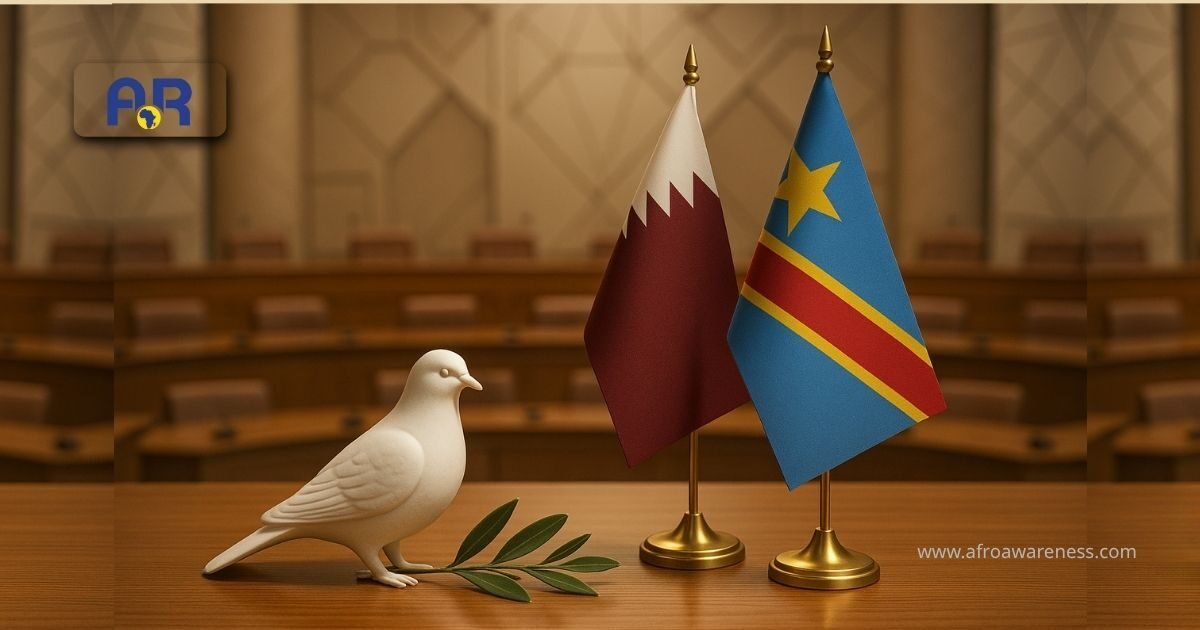
Amid this turbulent buildup, Doha opened a different avenue on November 15, 2025—not merely because it presented a new agreement, but because it represented an attempt to redefine the rules of conflict management in one of Africa’s most complex flashpoints.
The gradual path hosted by Doha—progressing from a declaration of principles in July to ceasefire arrangements in October, and culminating in the Framework Agreement in November—provided a crucial opportunity for political breathing room amid intensifying battlefield conditions. Coordinated international support, particularly the U.S. role and the legitimacy provided by the African Union, helped build a consensus moment that clearly could not have taken shape without Qatari mediation, which managed to preserve the thread of dialogue during the most fragile phases.
Throughout this process, the conviction emerged that addressing a conflict of such complexity could not be achieved through isolated military or political understandings, but rather through a comprehensive framework addressing the root causes and far-reaching dynamics of the crisis.
On this basis, this analysis seeks to understand this shift by tracing the circumstances that rendered the agreement an imperative necessity, identifying its executive structure and measurable mechanisms, examining the role played by Qatari mediation in stabilizing the track, evaluating the challenges facing implementation on the ground, and forecasting what all of this portends for the future of eastern Congo.
Through these five thematic tracks, a framework takes shape to analyze the agreement as a potential opportunity to recalibrate the balance of conflict—rather than a mere political document that shines momentarily before fading away.
First: Why Was the Agreement Necessary?
The crisis in eastern Democratic Republic of the Congo (DRC) reached an unprecedented level of complexity during 2024–2025 as the M23 movement expanded its sphere of control, reaching the outskirts of Goma—the administrative and economic gravity center of North Kivu.
This was accompanied by a widespread collapse in local security structures, record levels of internal displacement, and the government’s waning capacity to contain escalating attacks from both M23 and other armed groups operating in the region. This reality was sufficient to compel the formulation of a new negotiating framework, particularly after partial solutions exhausted their efficacy without delivering tangible impact on the ground.
Concurrently, long-standing ethnic tensions among local communities along the porous borders with Rwanda and Uganda intensified, imparting a complex character to the conflict that extended beyond a simple confrontation between a national army and an armed movement. This complexity was further fueled by historical policies regarding citizenship, identity, resource allocation, and weak state institutions that failed to enforce the rule of law across vital mining zones.
This coincided with a breakdown in trust between Kinshasa and Kigali, with both sides trading accusations of military support, transforming eastern Congo into an arena where domestic and regional conflicts intersected.
Furthermore, the limited effectiveness of previous mediations generated an international consensus that a different diplomatic approach was required. East African mechanisms failed to secure a permanent ceasefire, while internal Congolese dialogue tracks proved incapable of addressing root causes related to citizenship, representation, and transitional justice.
As M23 advanced toward strategic cities and internal pressure mounted on the government, establishing a comprehensive agreement not restricted to military dimensions became essential to stabilize the trajectory before the region slipped into a more dangerous phase.
Consequently, the search began for a multi-layered framework capable of addressing root causes and returning conflict parties to a structured negotiation track. In this context, the Doha Framework Agreement represents an attempt to reconstruct the “conflict management architecture” on broader foundations—combining a ceasefire, reform mechanisms, state authority consolidation, and identity and return issues in a manner previous agreements failed to achieve at the required depth.
Caption: The moment of signing the agreement leaves a highly significant impact on the situation across the African continent. Source: Al Jazeera
Second: Substance of the Doha Framework Agreement and Its Executive Protocols
The Doha Framework Agreement for Peace was established as a reference document outlining the overarching structure for the subsequent peace process. It incorporates eight executive protocols that serve as the foundational building blocks for the final accord:
Protocol on Humanitarian Assistance and Legal Protection
Protocol on the Restoration of State Authority, Reforms, and Governance Arrangements
Protocol on Temporary Security Arrangements, Disarmament, and Reintegration
Protocol on Identity, Citizenship, and the Return of Refugees and IDPs
Protocol on Economic and Social Recovery
Protocol on Justice and Reconciliation
Protocol on the Ceasefire Mechanism
Protocol on Prisoner Exchange
The first protocol addresses mechanisms for delivering humanitarian aid while ensuring legal protection for victims and relief workers within an operational environment marked by widespread violations.
The second protocol focuses on restoring state authority to regions beyond central control for years through phased temporary arrangements leading toward broader institutional reforms, including local governance and political participation—issues directly linked to the root marginalization that fueled previous cycles of rebellion.
The third protocol manages one of the most complex challenges: the disarmament and reintegration of local groups, alongside mechanisms for handling foreign armed groups active in the northeast—a point of significant regional sensitivity.
The fourth protocol covers identity and citizenship, including framework conditions for the safe return of refugees and IDPs, a domain requiring legal and social resolutions that extend beyond the agreement’s security dimension.
The fifth and sixth protocols link peace with reconstruction through economic and social recovery plans, running parallel to transitional justice and national reconciliation tracks.
The agreement’s emphasis on these protocols reflects an understanding that lasting peace requires arrangements extending beyond stopping hostilities to include rebuilding trust between state and society, fostering inclusive citizenship policies, and addressing the legacy of human rights abuses.
Third: The Role of Qatari Mediation and International Support
Qatari mediation emerged in this dossier as a dialogue platform capable of convening divergent parties at a sensitive juncture. Doha distinguished itself by managing a cumulative negotiation process that progressed systematically from a declaration of principles to ceasefire arrangements, culminating in a structurally binding framework agreement.
This gradual approach conferred greater credibility upon the process, particularly as the crisis was characterized by a severe trust deficit among stakeholders, making the establishment of a long-term framework more vital than pursuing a hasty accord. The Qatari role provided a relatively neutral political umbrella, allowing both parties to return to the table during a period of heightened tension.
The mediation benefited from broad international backing, particularly from the United States, which helped ease bilateral tensions between the DRC and Rwanda through an earlier agreement, thereby allowing focus to shift toward the relationship between the government and M23. For its part, the African Union provided continental legitimacy, reinforcing the link between the agreement and the broader peace and security architecture in the region.
Coordination between Doha and international partners elevated the expected level of commitment from the parties, positioning the agreement not as an isolated initiative, but as part of a multi-actor support network. The impact of this support was reflected in welcoming statements from various regional states, including Turkey and Gulf nations, adding a dimension that enhances the prospects of converting the agreement from a political text into an actionable roadmap.
Given Qatar’s experience in facilitating similar accords in complex conflicts, its role extends beyond convening parties to monitoring upcoming negotiation rounds regarding the remaining protocols. This role is expected to remain central to ensuring continuity, especially as the framework agreement represents the inception of a long journey rather than a final destination.
Fourth: Testing the Ground … Implementation Challenges
Transitioning the agreement from text to operational reality presents the primary hurdle. Eastern Congo remains one of the most complex operational environments on the African continent, featuring dozens of armed groups—some deeply embedded in local social structures, others transnational in nature. This proliferation renders security arrangements related to disarmament and reintegration a delicate process requiring precise mechanisms and coordination across multiple levels of authority.
Compounding this challenge, the Congolese state suffers from structural weaknesses and requires substantial resources to re-establish authority in areas outside its control for years. Reasserting control demands genuine institutional reform, including regulating security forces, improving community relations, and delivering basic services as a prerequisite for building trust. These requirements make implementation dependent on sustained coordination between the government and its international partners.
Furthermore, the regional dimension remains a decisive factor in determining success or failure. Relations between Kinshasa and Kigali have suffered from repeated strain linked to allegations of proxy support, necessitating open communication channels between both capitals to prevent setbacks that could trigger renewed escalation. Sustained tranquility between the two states is a parallel prerequisite for the success of any accord with M23.
The displacement crisis presents a simultaneous humanitarian and security challenge. The return of refugees touches upon citizenship, land rights, and property ownership, requiring careful handling to prevent it from becoming a fresh driver of conflict. Without tangible progress on this front, key components of the agreement may remain unexecutable, particularly in ethnically sensitive zones.
Fifth: What Does the Agreement Mean for the Future of Eastern Congo?
The Framework Agreement offers an opportunity to reorient the conflict trajectory toward a more structured path, shifting from immediate crisis management toward a cumulative approach that addresses root causes. Prioritizing executive protocols gives the agreement its real depth by establishing a nexus among security, governance, and development—an equation requiring synchronized progress that cannot be reduced to military dimensions alone.
With its phased executive structure, the agreement represents a serious effort to reformulate the peace approach in eastern Congo on more realistic foundations. If the government succeeds in enhancing its administrative and security presence through realistic, internationally backed arrangements, it could open the door to a transformation in state-society relations in the east. Enforcing the rule of law, improving public services, and broadening political participation are elements that can transform the perception of the state from a “distant power” into a “guaranteeing actor”—a shift the DRC has required for decades.
Likewise, linking economic recovery with transitional justice could address the ramifications of violence in a balanced manner by providing economic alternatives to communities living on the margins of the state, thereby weakening the war economy that sustains armed factions. If achieved, the agreement could mark a turning point toward an environment where natural resources are managed with greater transparency, away from the intertwined interests that historically fueled the conflict.
Finally, the agreement carries broader implications regarding the feasibility of constructing multi-party peace tracks in the Great Lakes region that capitalize on regional and international mediation momentum. Relative success here could encourage the design of similar approaches in other crises plagued by entrenched violence and political impasses, whereas failure risks returning the region to stagnation.
Nevertheless, the agreement—with its phased executive architecture—represents a serious attempt to reshape the peace paradigm in eastern Congo on more pragmatic grounds.
Conclusion
The Doha Framework Agreement establishes a rare opportunity to reorder the balance of power in eastern Congo; however, it remains an initial step in a long process requiring the parties’ capacity to translate high-level frameworks into concrete actions.
While the international and regional context provides the agreement with unprecedented momentum, ultimate success hinges on progress across sensitive domains: disarmament, state authority restoration, and addressing the root issues of citizenship and return. Qatari mediation remains a vital factor in maintaining this path, having provided a reliable framework for dialogue and integrated the accord into a broader support network extending beyond local actors.
Nonetheless, conditions on the ground will serve as the ultimate test of commitment. Any friction in relations between Kinshasa and Kigali or delays in protocol implementation could return the crisis to its initial state of tension. Conversely, if the agreement achieves incremental breakthroughs—even within limited spheres—it could mark a qualitative shift in managing a long-standing conflict driven by complex local and regional dynamics.
In the end, the agreement’s impact will not be measured by the number of meetings or signed provisions, but by the capacity of its arrangements to alter daily life for populations exhausted by war. If it opens a window for stability, return, and trust-building, it will have laid the cornerstone for a more balanced trajectory in eastern Congo—a path that tests the parties’ ability to transition from managing confrontation to managing peace.